
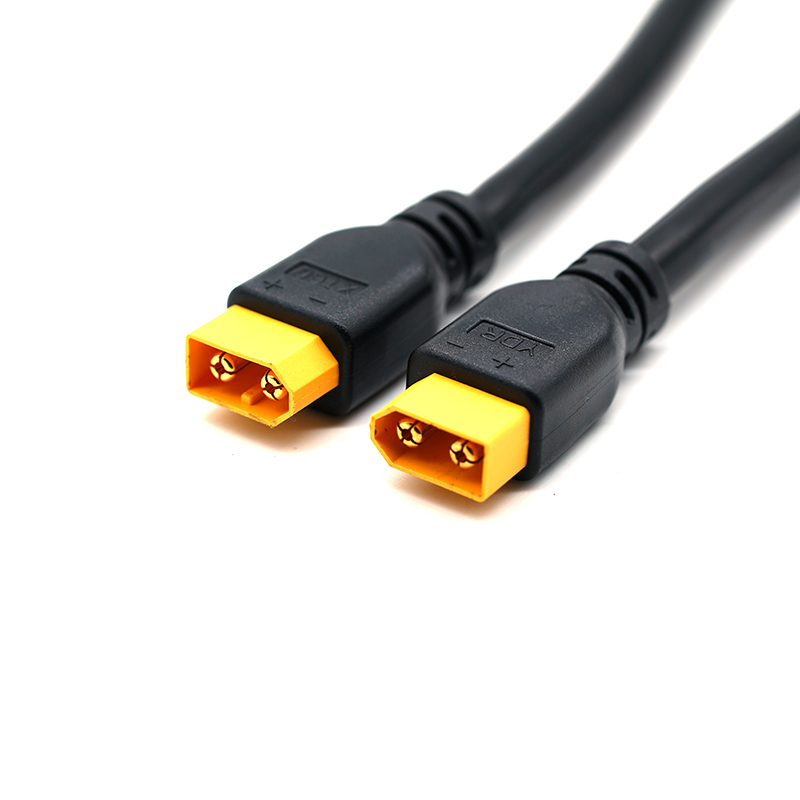
Choosing the right battery connection cable manufacturer matters when you need a dependable connection between a battery and an electronic device. An unsuitable wire gauge, incorrect connector type, or cable that does not fit your installation can create assembly problems and affect electrical performance. For OEM equipment manufacturers and cable assembly buyers, selecting the right specifications before production helps reduce compatibility issues and simplify integration.
Shenzhen JYE Technology Co., LTD manufactures custom wire harnesses and connector solutions for applications across automotive electronics, industrial equipment, drones, and consumer electronics. Its XT60 male and female cable assemblies support customized wire lengths and multiple insulation material options. With a stated rated current of 35A, these two-pin cables provide a practical option for projects that require an XT60 connection. By defining your operating conditions and installation requirements, you can select a cable configuration that fits your equipment.
XT60 Male and Female Cable Specifications
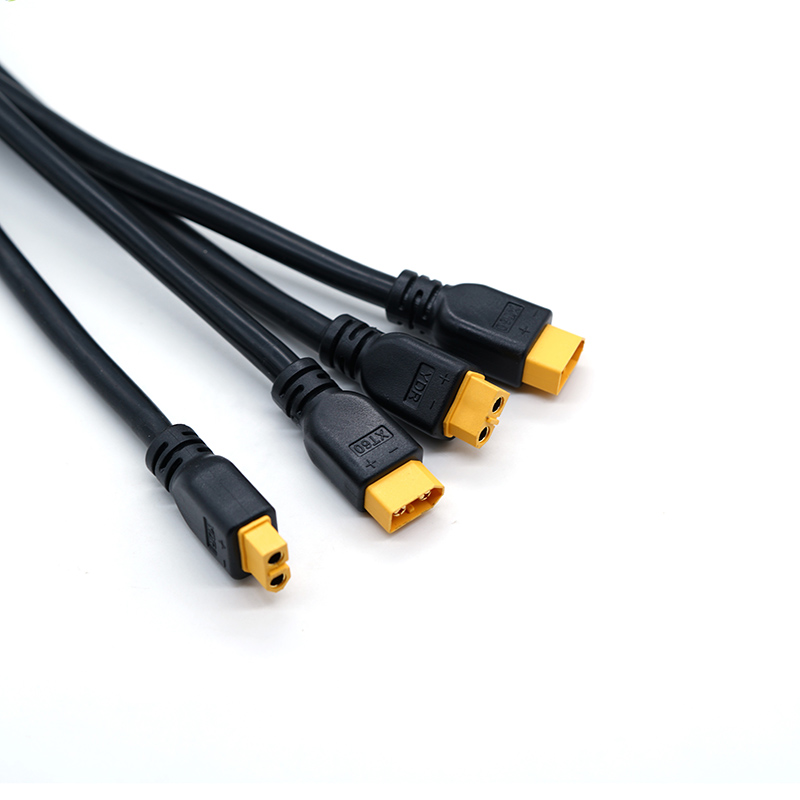
The XT60 connector cable combines a two-pin connector interface with wires that can be customized to suit your assembly requirements. When sourcing an XT60 male cable or XT60 female cable, check the connector type, wire gauge, insulation material, and finished length before placing an order.
The listed product specifications are:
| Parameter | Specification |
|---|---|
| Connector type | XT60 male / XT60 female |
| Number of pins | 2 pins |
| Rated current | 35A |
| Contact resistance | 1.2 MΩ maximum (as supplied in product data) |
| Insulation resistance | 100 MΩ minimum |
| Withstanding voltage | 600V DC |
| Temperature range | -20°C to +120°C |
| Applicable wire gauge | 22–14 AWG |
| Wire insulation | Silicone, PVC, Teflon, rubber, or XLPE |
| Wire length | Customizable |
Technical note: Confirm the resistance units and test conditions with the manufacturer before approving the specification. The listed contact resistance of 1.2 MΩ is unusually high for a power connector, and it may be a unit-entry error. Also, verify that the selected wire gauge supports your intended current and temperature conditions; the 35A rating should not automatically be assumed to apply to every wire configuration.
Why Choose a Custom Battery Connection Cable?
A standard cable may not match your enclosure, wiring route, or production requirements. A custom battery connector cable lets you specify the details needed for your equipment.
- Flexible cable length: Request a length that fits your installation and reduces unnecessary excess wiring.
- Multiple insulation options: Choose silicone, PVC, Teflon, rubber, or XLPE according to your application and environmental requirements.
- Defined connector interface: Specify male or female XT60 termination to match the mating component.
- Wire gauge selection: Select from the listed 22–14 AWG range after evaluating current, cable length, temperature rise, and installation conditions.
- OEM integration: Provide drawings, wiring diagrams, or samples to help define the required cable assembly.
JYE Technology was established in 2010 and reports a 5,000 m² manufacturing facility and a team of more than 100 professionals. The company also states that its products comply with RoHS, UL, CE, and REACH requirements. Confirm the specific certification documents and their applicability to the cable assembly you intend to purchase.
Typical Applications for XT60 Connector Cables
XT60 cables are used in equipment that requires compatible two-pin power connections. Depending on the electrical design and connector configuration, potential applications include:
- Drone power systems: Connecting compatible battery packs to power distribution components.
- Battery-powered equipment: Routing DC power between a battery and a compatible device.
- Electronic prototypes: Building replaceable power leads for testing and development.
- Custom equipment assemblies: Integrating battery connections into OEM products with defined cable routing requirements.
Before selecting a cable, verify the mating connector, polarity, expected current, voltage, operating temperature, and available installation space. XT60 compatibility alone does not establish that a cable is suitable for every battery-powered application.
How to Specify a Custom XT60 Battery Cable
To obtain a suitable quotation from a battery connection cable manufacturer, prepare the following information before requesting samples or production pricing.
- Define the connector configuration. Identify whether you need an XT60 male cable, an XT60 female cable, or both.
- Confirm electrical requirements. Provide the operating voltage, expected continuous and peak current, and any relevant test requirements.
- Select the wire gauge. Specify the required AWG size based on current, cable length, installation conditions, and allowable voltage drop.
- Choose insulation and length. Select the appropriate insulation material and state the required finished cable length.
- Review samples and documentation. Confirm polarity, connector fit, wire construction, dimensions, and applicable electrical test results before approving production.
This process helps your engineering and purchasing teams establish a clear specification and reduces avoidable changes during assembly.
How Does a Custom XT60 Cable Compare With a Standard Cable?
| Selection factor | Standard cable | Custom XT60 cable |
|---|---|---|
| Cable length | Usually predetermined | Can be specified for the application |
| Wire insulation | Limited stock options | Can be selected from available materials |
| Connector configuration | Depends on the supplied model | Can be specified as male or female |
| Procurement process | Suitable for straightforward replacements | Useful for OEM designs and repeat production |
| Main consideration | Confirm stock specifications | Confirm custom specifications and validation |
Neither option is suitable for every project. A standard cable may work well when its specifications already match your design, while a custom assembly offers greater flexibility when the installation has specific requirements.
FAQ
1. Can I order a custom-length XT60 male or female cable?
Yes. JYE Technology lists wire length as customizable. Provide your required finished length and connector configuration when requesting a quotation.
2. Which wire gauge should I choose for a 35A XT60 cable?
The appropriate gauge depends on current duration, cable length, ambient temperature, insulation, and installation conditions. Although the listed product supports 22–14 AWG, do not assume every gauge can safely carry 35A. Ask the manufacturer to confirm the suitable configuration against your requirements.
3. What certifications should I check when sourcing battery connection cables?
Check the documents relevant to your application, including applicable RoHS, UL, CE, or REACH documentation. These requirements are not interchangeable, and a company’s general compliance statement does not automatically certify every individual cable assembly.
Conclusion
Selecting the right battery connection cable manufacturer starts with matching connector compatibility, wire gauge, insulation, cable length, and electrical requirements to your application. JYE Technology offers XT60 male and female cables with customizable lengths and multiple insulation options, supported by its broader wire harness manufacturing capabilities. Confirm the technical parameters and required compliance documents before finalizing your order to help ensure the cable assembly meets your design and procurement requirements.
Request a Custom XT60 Cable Quotation
Contact Shenzhen JYE Technology Co., LTD at len@jyetechnology.com or sales01@jyetechnology.com. Share your connector type, wire gauge, cable length, insulation preference, and operating current to discuss a suitable configuration for your project.


Add comment